
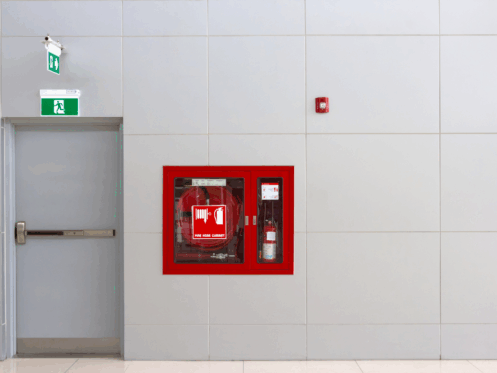
Unlike roll up garage doors, which are commonly used for access and security, fire rated doors are specifically tested for their performance under extreme heat. They form a protective barrier that supports safe evacuation and helps minimize property loss.
Understanding the Purpose of Fire Rated Doors
The primary purpose of a fire rated door is to resist the passage of fire and radiant heat for a designated period. Local codes and safety standards require these doors in many commercial and industrial buildings where fire containment is critical.
These barriers help:
- Improve evacuation time
- Reduce fire spread between rooms and corridors
- Protect high-value areas
- Maintain compartmentation in the building
Our team conducts fire door inspection and services through our dedicated offering. Contact us today to book an inspection!
How Fire Rated Doors Are Constructed
A fireproof door is not just a heavier version of a standard door. It is engineered with specialized materials and a reinforced door frame to resist high temperatures. Construction varies based on the rating and application.
Common materials include:
- Fire rated steel door components for industrial sites
- Fire rated wood doors for offices or interior applications
- Insulating cores designed to limit heat movement
- Intumescent seals that expand under extreme heat
- Heavy-duty hinges and hardware designed to withstand stress
The construction of internal assemblies allows the door to maintain shape and integrity during fire door testing, even as temperatures rise.
Different Types of Fire Rated Doors
There are several types of internal fire doors, each serving a specific purpose. While each door meets strict testing standards, the design varies based on where it will be installed.
- Swinging Fire Rated Doors:- These are the most common and function like traditional hinged doors. They protect hallways, stairwells, and utility rooms.
- Sliding Fire Rated Doors:- These are used in larger commercial environments where wide openings must be protected.
- Rolling Steel Fire Doors:- These are typically found in warehouses and manufacturing environments. Though they differ from roll up garage doors, they operate in a similar way while offering fire-resistant performance.
- Fire Rated Access Doors:- Used to protect mechanical spaces, electrical rooms, and controlled areas.
Each type must meet strict certification requirements before installation.
Key Features of a Certified Fire Rated Door
A properly certified fire rated door includes several important features that ensure safety and compliance:
- Clear fire rating label
- Reinforced core and structural materials
- Fire-tested hardware
- Heat-resistant seals
- Compatibility with the door frame and wall assembly
- Verified testing results from an approved laboratory
When we inspect or service a fire door, we verify each of these components to ensure they meet regulatory requirements.
Where Fire Rated Doors Are Required
Most building codes require fire rated doors in areas where fire protection is essential for evacuation and compartment separation. These locations include:
- Electrical and mechanical rooms
- Storage areas
- Stairwells
- Hallways in commercial buildings
- Fire-rated corridors
- Openings between high-risk rooms
- Certain exterior access points or side door locations
Placement is determined by fire-protection design, occupancy type, and structural layout. If you’re unsure whether your building requires specific doors, our team can assist.
Installation and Maintenance Requirements
Proper fire door installation is critical to ensure the door performs as designed. Even the strongest fire rated steel door cannot provide protection if it is installed incorrectly.
Routine maintenance of fire doors may include:
- Checking alignment and clearances
- Inspecting hardware
- Checking seals and gasketing
- Ensuring the closing mechanism operates smoothly
- Verifying that the certification label is in place
- Ensuring nothing blocks the door from closing fully
Benefits of Using Fire Rated Doors in Buildings
Fire rated doors slow the movement of flames and smoke, creating safer evacuation routes and giving building occupants more time to exit. This added protection supports overall emergency response and life-safety planning.
- Reduced Structural Damage: By containing fire within a specific area, these doors help limit damage to walls, equipment, and essential building systems. This containment can significantly reduce repair costs and downtime after an incident.
- Better Insurance Compliance: Fire rated doors support safety documentation and compliance often required by insurers. Having the correct protective systems in place may help streamline inspections and strengthen overall risk management for the facility.
- Smooth Building Operations: With proper installation and maintenance, fire rated doors operate much like standard doors while offering added protection. They support efficient daily workflow without compromising safety or interfering with normal building activity.
- Improved Code Compliance: Meeting fire-safety code requirements reduces the likelihood of violations or penalties. Fire rated doors contribute to building-wide compliance, helping ensure safer conditions and aligning the property with regulatory expectations.
How Fire Rated Doors Differ From Roll Up Garage Doors
Many facility managers compare fire rated doors to roll up garage doors. Although both are durable, they serve very different functions.
- Roll up garage doors focus on access, security, and efficiency.
- Fire rated doors protect against heat transfer, flames, and smoke.
- Materials, hardware, and testing standards differ greatly.
If your building uses both styles, we can help ensure each meets its performance requirements.
Fire Door Testing and Certification
Every certified fire rated door undergoes strict fire door testing. The door is exposed to controlled fire conditions to evaluate its resistance for a specific time period. During testing, technicians measure:
- Structural integrity
- Temperature rise
- Flame spread
- Smoke control abilities
Only doors that meet all criteria receive a rating label. This label is required for compliance and should never be removed.
Conclusion
Understanding what a fire rated door is and how it safeguards your building, which is essential for maintaining safety, compliance, and long-term operational reliability. These doors serve as a critical barrier during a fire, slowing the spread of flames, smoke, and heat. From careful construction and proper placement to routine inspection and maintenance, every component plays a vital role in protecting occupants and preserving the structure. Investing in the right fire rated solutions supports a stronger safety strategy for any commercial or industrial facility.
Frequently Asked Questions
1. What makes a door fire-rated?
A fire-rated door is constructed with tested materials that resist flames, smoke, and heat for a certified period. It goes through regulated testing and must include an approved label. For guidance on selecting the right door, please contact our team directly.
2. What is the difference between a fire door and a normal door?
A fire door is engineered to withstand extreme heat and slow fire spread, while a normal door does not offer this protection. Certified fire doors include special seals, hardware, and ratings. If you need help determining what your building requires, our team can assist.
3. Are all fire-rated doors labeled?
Yes, compliant fire-rated doors include an official label indicating their rating and certification. This marking confirms the door has been tested. If you are unsure whether your door is properly labeled, please contact us for evaluation.